
The foam-versus-spring debate has been around for so long that it can sound as though there must be one correct answer. Someone will tell you foam is better because it is comfortable. Someone else will insist that springs are better because they are firmer. Then you discover that both people are sleeping on completely different mattresses and have completely different preferences.
That is the real point: there is no universal winner in the foam vs spring mattress conversation. The right choice depends on how you sleep, how you like a mattress to feel, whether you share the bed, how warm your room gets, your budget, and the quality of the particular mattress you are considering.
So instead of asking, "Which is better?" a more useful question is Which is better for me?
How Foam Mattresses Work
Foam mattresses rely on foam materials for much of their comfort and/or support. Depending on the construction, foam can create a surface that feels cushioning, conforming or relatively firm. Some foam materials allow the body to settle more deeply into the surface, while denser or firmer constructions can provide a more stable feel.
One reason many sleepers like foam is the way it can cushion the body and reduce movement across the mattress. Foam mattresses generally offer good conforming and motion isolation, although some foam materials can retain more body heat.
That does not mean every foam mattress feels the same. Foam describes a broad category, not one identical product. The material, density, thickness, and construction all influence the final feel.
How Spring Mattresses Work
Spring mattresses use metal coils as an important part of the support system. The coils create a more responsive feel, which many people describe as bouncy or lively. They can also allow more airflow through the mattress structure, which may appeal to sleepers who prefer a more ventilated feel.
Again, spring mattresses are not all identical. Coil construction, gauge, arrangement and the comfort layers above the springs can change the way a mattress feels. A spring mattress with a substantial comfort layer can feel very different from one with a thinner top layer.
So when comparing two spring mattresses, do not stop at the word spring. Ask what is actually inside and how the complete mattress is designed.
Comfort and Support Are Not the Same Question
This is where many mattress comparisons become confusing. A mattress can feel soft without being unsupportive, and a firm mattress can still be uncomfortable for a particular sleeper. Firmness describes surface feel, while support relates to how the mattress holds the body and helps prevent excessive or uneven sinking.
For side sleepers, a little more cushioning may help the shoulders and hips feel comfortable. Back sleepers often look for a balance between cushioning and stability, while stomach sleepers may prefer a firmer surface. Combination sleepers have to find a compromise that works across positions.
The best way to use these guidelines is as a starting point, not a verdict.
What About Heat and Airflow?
Nigeria's warm climate makes temperature worth considering. Spring construction generally permits more airflow around the coil system, while some foam materials can retain more heat.
But your mattress is only one part of the equation. A poorly ventilated room, heavy bedding and limited air movement can make almost any sleep setup feel warmer. If you sleep hot, consider the mattress construction alongside your sheets, blanket, room ventilation and personal comfort preferences.
If temperature is a major concern for you, ask specifically how the mattress is constructed rather than assuming that every foam or every spring mattress will behave exactly the same way.
Movement, Couples and Sleeping Together
If you share a bed, movement can become an important part of the decision. Foam often does a good job of reducing motion transfer, which can be useful when one person moves more than the other. Spring mattresses can feel more responsive and may transfer more movement depending on their construction.
But couples should also discuss firmness, sleeping position, temperature preferences, mattress size and budget. There is no point choosing a mattress based on motion isolation if one partner cannot get comfortable on its surface.
If possible, test the mattress together. A mattress can feel completely different when two people are using it compared with when one person tests it alone.
Durability and Long-Term Value
Durability depends on much more than whether a mattress contains foam or springs. Material quality, construction, usage, body weight, sleep position, foundation, and maintenance all play a role. Average lifespans vary by construction and should be treated as general guidance rather than a promise for every individual mattress.
This is why price alone is a poor shortcut. A cheaper mattress that becomes uncomfortable quickly may not represent better value than a more durable option that serves you well for longer.
Look at the complete proposition: materials, construction, expected durability, comfort, support, applicable warranty terms, care requirements and the reputation of the manufacturer and seller.
Foam or Spring: Which One Might Suit You?
You may lean toward foam if you like a more cushioning feel, want to reduce movement between sleepers or prefer a surface that conforms more closely to the body. You may lean toward spring if you prefer responsiveness, bounce and the more open feel associated with coil construction.
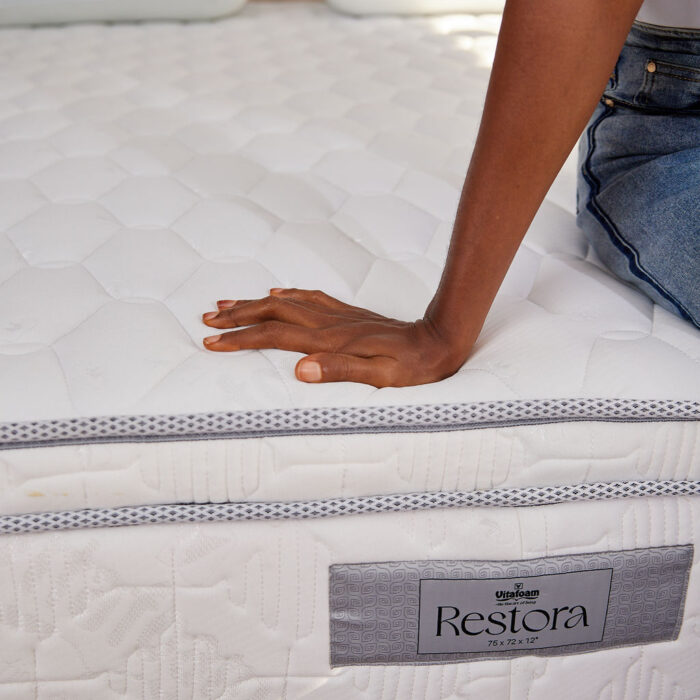
You may also prefer a hybrid if you want a combination of spring responsiveness and foam cushioning. Vitafoam's Restora is an example of a hybrid product; its official product page describes it as a foam/pocket-spring quilted pillow-top mattress.
None of these descriptions should replace testing the mattress or checking its official specifications. They simply give you a better way to narrow your choices.
A Better Way to Compare Mattresses
When you are standing in a showroom or comparing products online, create a short checklist. Ask what materials and construction the mattress uses, how firm it is designed to feel, what sizes are available, how it should be cared for, what warranty or after-sales terms apply, and whether the product is genuine and sold through an authorized channel.
Then bring the decision back to your own life. If you are a side sleeper in a warm apartment, your priorities may be different from those of someone who sleeps on their back in a cool, well-ventilated room. If you share a bed, movement and size may matter more. If you are furnishing your first apartment, budget and transport may be major considerations.
The best comparison is therefore not foam versus spring. It is this mattress versus my actual needs.
Frequently Asked Questions
Is foam better than spring?
No single construction is better for everyone. Foam can provide contouring and motion isolation, while spring mattresses tend to offer responsiveness and airflow.
Are spring mattresses cooler?
Spring construction generally allows more airflow, but overall sleep temperature also depends on comfort layers, bedding, room ventilation and the sleeper.
Which is better for couples?
It depends on both sleepers. Motion transfer, firmness, size and temperature preferences should all be discussed.
Can a mattress be both foam and spring?
Yes. Hybrid mattresses combine a spring support system with foam or other comfort materials. Vitafoam's Restora is one current example.
Final Thoughts
Foam and spring mattresses each have legitimate strengths.
The mistake is assuming that a category can make the decision for you.
Start with your sleeping position, comfort preferences, climate, room, budget, and whether you share the bed. Then compare the construction and specifications of the actual mattresses in front of you. When you do that, the choice becomes less about mattress arguments and more about finding a sleep surface that genuinely fits your life.